Summary (Quick Takeaway):
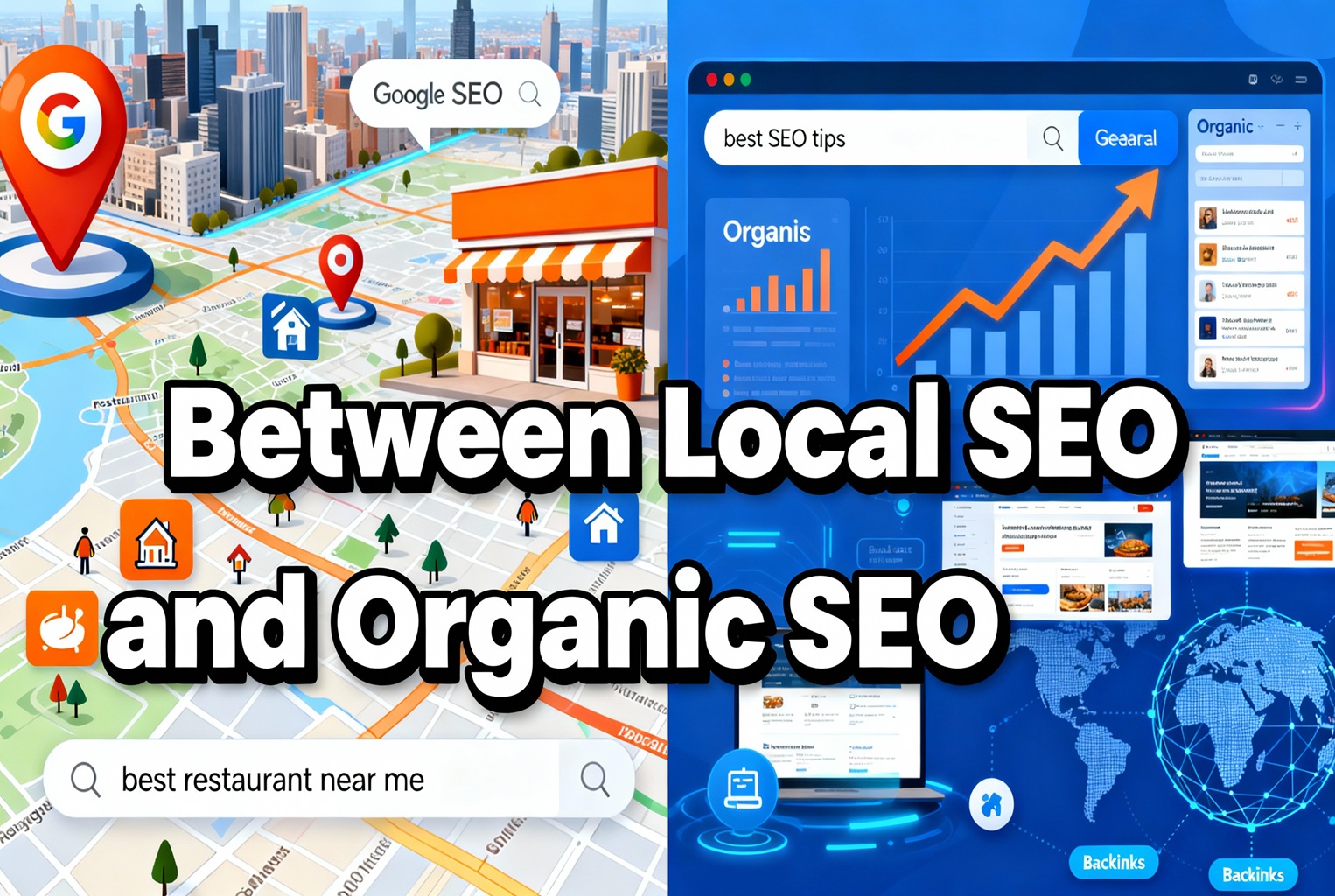
Local SEO helps you rank for location-based searches like “dentist in Noida” or “salon near me”, while organic SEO helps you rank for broader topics like “best skincare tips” or “how to choose a dentist”.
Local SEO drives high-intent, nearby customers—often faster—whereas organic SEO builds long-term authority and traffic across India or even globally.
For the best results, both should work together.
Introduction
If you’re a small business owner, student, freelancer, marketer, or startup founder, you’ve probably wondered:
“What is the difference between local and organic SEO?”
or
“Should I invest in Local SEO, Organic SEO, or both?”
This confusion is common—especially for businesses in India where competition is rising across Google Search and Google Maps.
In this guide, you’ll learn the clear, research-backed difference between Local SEO and Organic SEO, how each one works, and which strategy suits your business goals.
Rank Higher with Local SEO Expert in India
Drive more foot traffic and local leads with proven SEO strategies tailored for your business.
Explore Similar Local SEO Resources
- Local Search Engine Optimization Guide
- How to Do Local Keyword Research
- How to Build Local Citations (Complete Guide 2025)
- How Local SEO Increases Profits
- Local SEO for E-commerce in India
- How to Choose Local SEO Company Near Me
- Local SEO for Multi-Locations: A Complete Guide for Businesses in India
- How to Rank Your Local Business First on ChatGPT & Google AI
- How to Rank in the Local SEO 3-Pack
- Should Franchises Have Separate URLs for Local SEO
- What Is the Difference Between Local and Organic SEO
- The Ultimate List of Local SEO Metrics for 2026
- Step-by-Step Guide to Rank in the Google Map Pack for “Near Me” Keywords
What Is Local SEO?
Local SEO is the process of optimizing your business for location-specific searches.
It helps your business appear when people search for terms like:
- “restaurant near me”
- “yoga classes in Pune”
- “interior designer in Ahmedabad”
The core goal of Local SEO is simple:
👉 Attract nearby customers who are ready to visit or call.
Local SEO heavily focuses on visibility in:
- Google Maps
- Local Pack (3-map results)
- Location-based Google search results
Core Focus of Local SEO
Your research highlights that Local SEO is driven by:
- Geographic relevance
- Proximity
- Local business listings
- “Near me” optimization
This makes Local SEO ideal for local service providers, clinics, restaurants, salons, electricians, plumbers, tutors, and any business requiring footfall or local leads.
What Is Organic SEO?
Organic SEO focuses on ranking for broader, non-geographic keywords like:
- “best dentist tips”
- “how to repair a washing machine”
- “digital marketing basics”
The purpose is to improve a website’s overall authority and attract traffic from across India—or even globally.
Core Focus of Organic SEO
Organic SEO prioritizes:
- High-quality content
- Backlinks
- Website authority
- Technical optimization
- User experience
Organic SEO is perfect for:
- Bloggers
- E-commerce stores
- National service providers
- Startups targeting pan-India audiences
- Agencies and freelancers
Local SEO vs Organic SEO (Key Differences)
Here’s the simplified difference based strictly on your research:
| Aspect | Local SEO | Organic SEO |
|---|---|---|
| Primary Tools | Google Business Profile, citations, reviews | Content, backlinks, technical SEO |
| Keywords | Location-based (e.g., “dentist in Noida”) | General keywords (e.g., “best dentist tips”) |
| Target Audience | Nearby customers ready to visit or call | Users searching for information or broader solutions |
| Goal | Drive foot traffic and local leads | Build long-term organic visibility |
| Search Appearance | Google Maps, Local Pack, local results | Standard Google Search results |
| Geographic Dependency | High — proximity matters | No location boundaries |
Local SEO Benefits
Based on your research, Local SEO brings:
1. Faster Results Than Organic SEO
Optimizing your Google Business Profile and collecting reviews can boost your visibility quickly—especially for businesses in competitive Indian cities.
2. High-Intent Leads
Users searching “near me” or “in <city>” are ready to take action.
3. Better Visibility on Google Maps
Maps-based searches dominate local buying behavior.
4. Strong ROI for Local Businesses
Restaurants, salons, clinics, or repair services get immediate traction.
Organic SEO Benefits
Your research identifies that Organic SEO:
1. Builds Long-Term Traffic
Once you rank for strong informational keywords, traffic keeps growing.
2. Expands Your Reach Beyond Local
Perfect for national or global businesses.
3. Strengthens Overall Website Authority
Better content + better user experience = stronger rankings.
4. Complements Local SEO
Organic SEO makes your website stronger, indirectly improving local rankings too.
Local SEO Ranking Factors
Based on the insights you shared, Local SEO is influenced by:
- Proximity to the searcher
- Google Business Profile optimization
- Reviews and local ratings
- Local citations
- Local relevance of content
Organic SEO Ranking Factors
Your research shows Organic SEO depends on:
- Content quality
- Topical authority
- Backlinks
- Technical SEO
- User experience
Organic SEO is less about location and more about expertise, relevance, and authority.
Local SEO vs Organic SEO – Which One Do You Need?
Here’s how to decide:
✔ Choose Local SEO if:
- Your customers are nearby
- You want leads from Maps and local searches
- You run a service business
- You need foot traffic
- Example: restaurants, salons, clinics, electricians
✔ Choose Organic SEO if:
- You target customers across multiple cities or India-wide
- You publish informational content
- You run a blog or e-commerce store
✔ Choose Both if:
You want to dominate Google from every angle.
Your research strongly noted:
👉 Combining Local + Organic SEO maximizes ROI.
👉 Both rely on quality content and user experience.
👉 They complement each other naturally.
Conclusion
The difference between Local and Organic SEO is simple but powerful:
- Local SEO = Local intent, Maps visibility, “near me” searches
- Organic SEO = Broader keywords, long-term authority, national reach
For Indian businesses—especially small shops, freelancers, startups, and agencies—using both approaches is the smartest way to grow visibility, leads, and revenue.
If you’re planning your SEO strategy for 2026 and beyond, start by analyzing your audience. Do they search locally? Or nationally?
Your answer will guide your approach.
FAQs
1. What is the main difference between Local SEO and Organic SEO?
2. Which works faster: Local SEO or Organic SEO?
3. Do I need Organic SEO if I already do Local SEO?
4. Is Local SEO useful for e-commerce stores?
5. Should freelancers offer Local and Organic SEO separately?